Tag Archive for: transformer performance

Transformers in photovoltaics: choosing the right transformer for maximum efficiency of a photovoltaic power plant

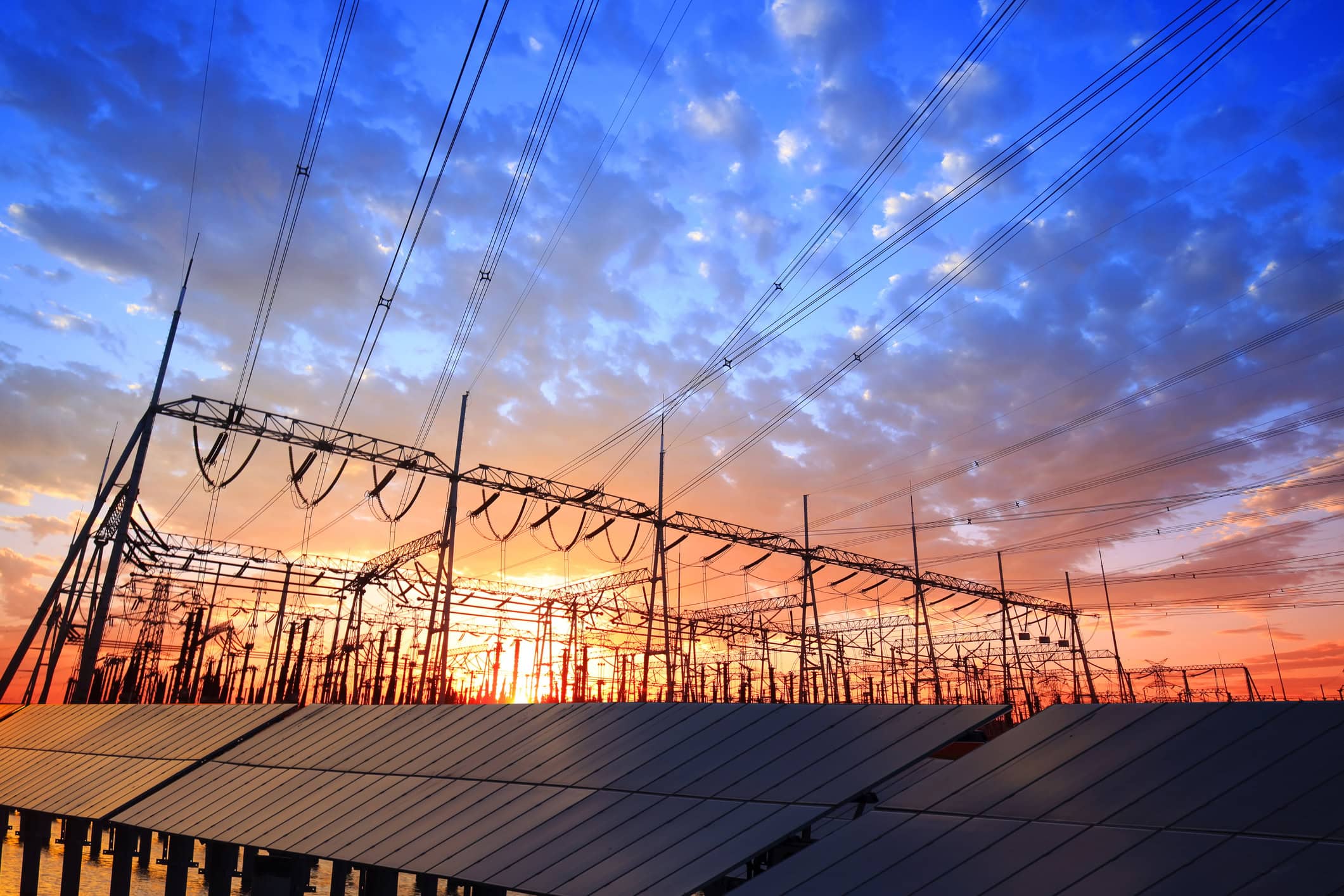
Discussions of green energy often focus on photovoltaic panels, which convert sunlight into electricity, and inverters, which transform direct current into alternating current. While these components are crucial, there is another and often overlooked link in the chain between the PV array and our homes or industrial plants: the transformer. But transformers in PV are not limited to raising the voltage.

The role of transformers in photovoltaic power plants

Photovoltaic systems, whatever their size, have a fundamental challenge: the energy they generate must be adapted to meet the stringent requirements of the electricity grid.

Increasing tension

Photovoltaic panels produce direct current (DC), which the inverter then converts to alternating current (AC). However, this AC current is generated at a relatively low voltage. While this would be sufficient for normal domestic use, it is inefficient and uneconomical for transmission over medium and long distances to distribution points. Therefore, a transformer comes into play. It receives AC current from inverters and its main task is to radically increase the voltage to grid level (e.g. 22 kV, 35 kV, or up to 110 kV for large parks). Without this step, there would be huge energy losses. This is because higher voltages allow power to be transmitted at a much lower amperage, thus minimising losses in the lines.

Insulation and system safety

The transformer also performs a safety function. It provides galvanic isolation of the photovoltaic system from the distribution network. This decoupling protects the expensive and sensitive inverters from surges, surges and faults that can occur on the grid, while ensuring that faults in the solar park do not critically affect the stability of the utility grid.

transformer in photovoltaics

Typology of transformers in photovoltaic systems

BEZ TRANSFORMÁTORY offers two main types of transformers for photovoltaic parks: oil-immersed and dry-type transformers.

Oil Transformers for Renewable Energy

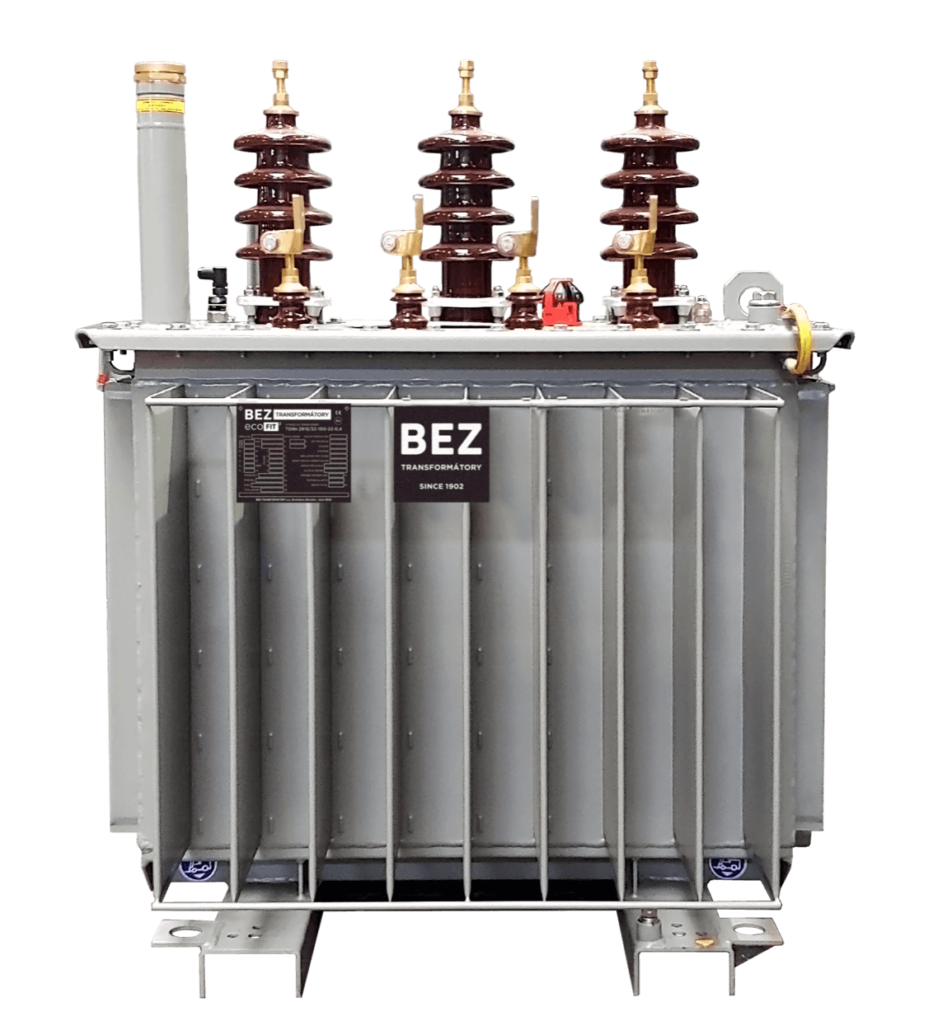
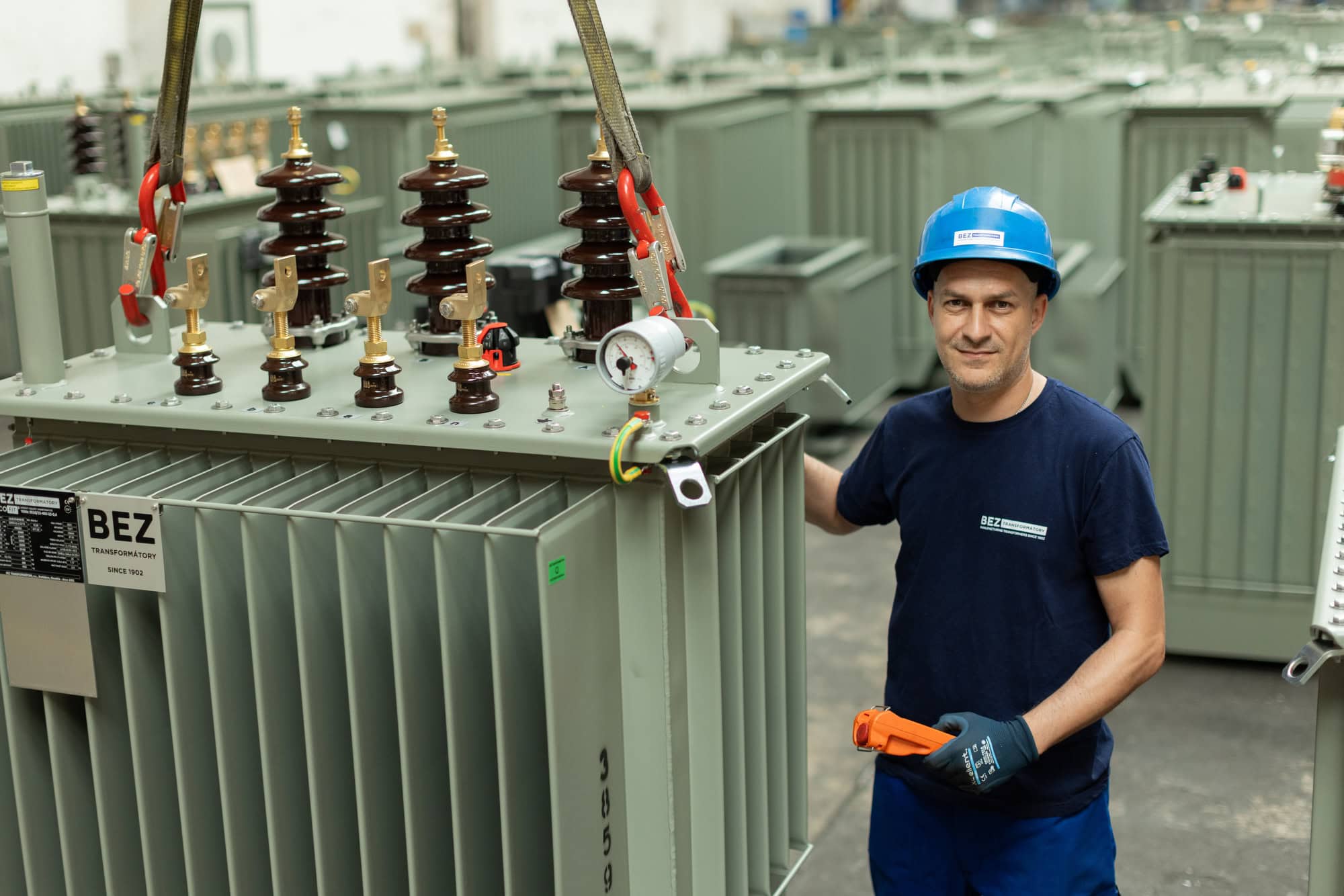
Oil-cooled transformers are cooled by mineral oil and are the most widely used type in the long term, particularly suitable for outdoor PV park environments where they can withstand adverse weather conditions. Thanks to oil cooling, they can dissipate heat efficiently even under higher loads and offer excellent reliability and extended service life.

oil transformer

Dry-type transformers for renewable energies

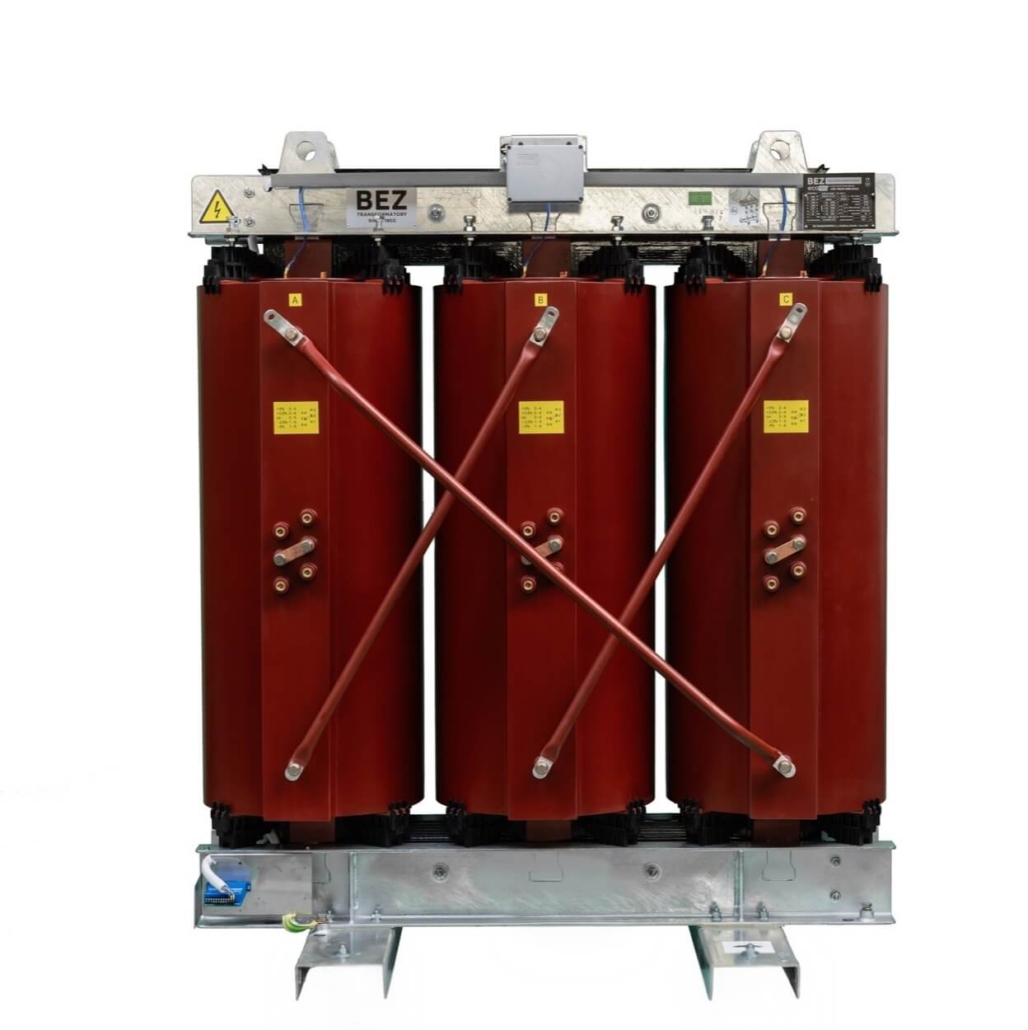
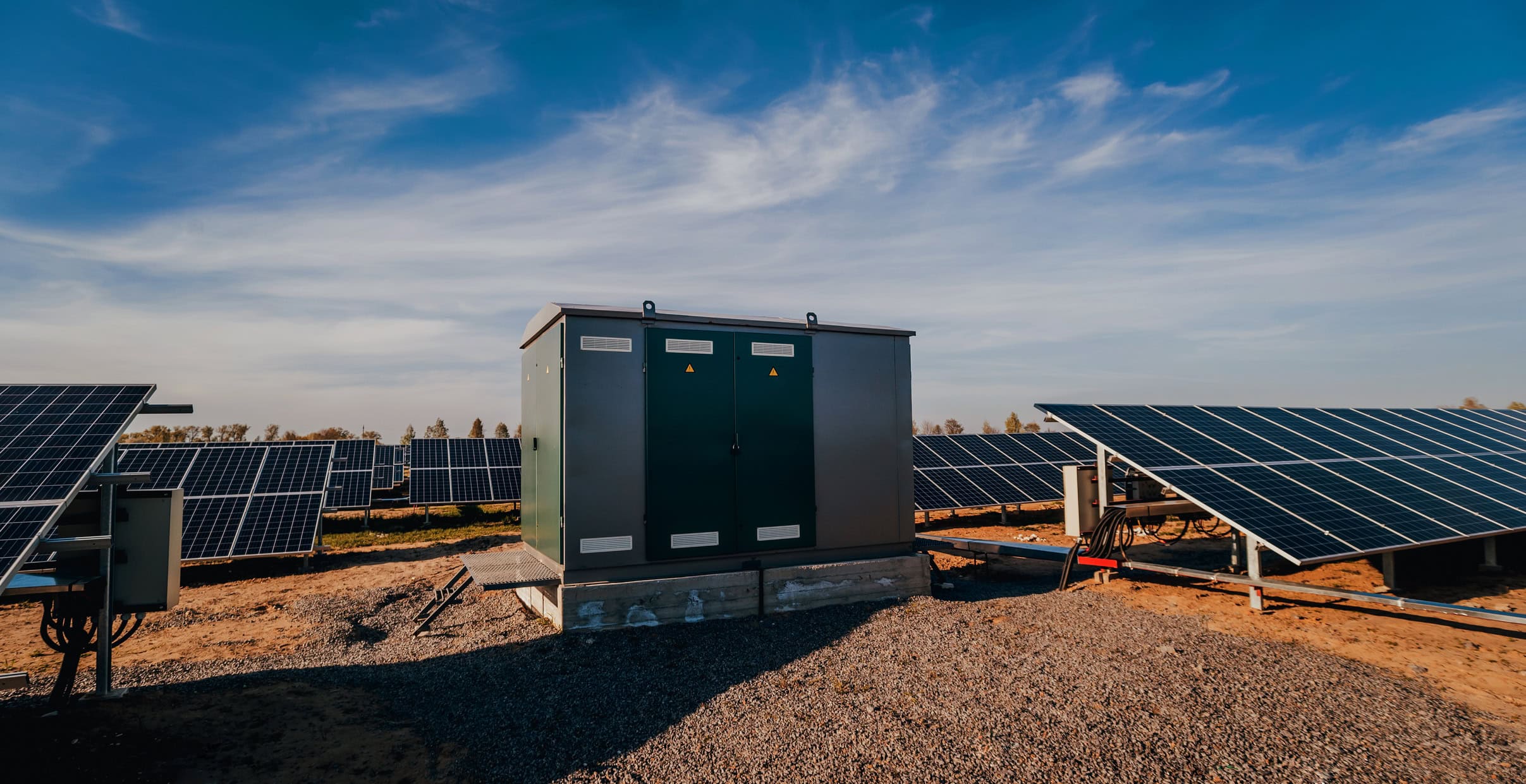
Dry-type transformers do not use liquid dielectric, but are cooled by air. They are ideal for indoor and container stations where there are increased demands on fire safety, for example in close proximity to inverters or in densely built-up areas. They are more environmentally friendly, require less maintenance and eliminate the risk of oil leaks.

dry transformer

Impact of transformers on the efficiency and stability of power transmission

The quality of the transformer directly determines the economic success and technical reliability of the entire solar project.

Efficiency and loss minimisation

As we have already mentioned, loss minimisation is a key factor. This is because by increasing the voltage, the current drops, which dramatically reduces the heat loss. Transformers with low intrinsic losses maximize the amount of energy produced that actually reaches the consumer. Thanks to their robust design and life expectancy in excess of 30 years, transformers guarantee a long-term return on investment and reliable operation of the PV park in a variety of climatic and operating conditions. The investment in a transformer with low no-load and short-circuit losses will thus pay for itself many times over during the long lifetime of the project.

Network stability and quality control

Photovoltaics, although a clean source, can present challenges in the form of voltage fluctuations and THD harmonic distortion generated by inverters. Therefore, advanced transformers have systems that allow smooth and automatic voltage regulation, thus maintaining grid stability even with rapid changes in sunshine. In addition, the transformer helps to dampen and filter harmonic currents. This ensures that the energy supplied to the distribution system is clean and meets all standards.

transformer in photovoltaic power plant

The challenge of the future

As PV expands and integrates into smart grids and battery storage, the demands on transformers will only increase. Their quality design, ability to handle fluctuating loads and minimize losses are essential for a successful and sustainable transition to green energy.

If you are currently designing or optimizing your PV park and are looking for a customized solution that guarantees low losses and long lifetime, contact us. Our technical specialists will be happy to help you with your selection.

Transformer voltage transformer: key role and practical application

Without transformers, electricity could not travel efficiently and safely from the power station to your socket, nor would most industrial machinery work. But all functionality depends on one key principle. It is voltage conversion.

How transformers change voltage level

A transformer is essentially a static device that transfers electrical energy from one circuit to another without direct electrical contact, using a magnetic field. The principle of electromagnetic induction is the basis for voltage transfer in a transformer , discovered by Michael Faraday. When an alternating current passes through the primary winding, it creates a constantly changing magnetic field in the core. This changing field passes through the secondary winding and induces a voltage in it. What the output voltage level will be depends entirely on the ratio of the number of turns of the primary and secondary windings. This relationship defines the key parameter of the transformer: the transformation ratio.

Voltage units and conversion of voltage units

When discussing voltage conversion, we cannot avoid the fundamental physical quantity: electrical voltage. The basic unit of electrical voltage in a system is the volt, named after the Italian physicist Alessandro Volta. The conversion or transformation of voltage units is, of course, necessary for the precise design and operation of networks. When we need to determine what voltage a transformer will handle, we always work in consistent units: volts, millivolts, kilovolts or megavolts.

step-up and distribution transformers

From mains to USB charger

The role of transformers is divided into two main categories: strategic (in the power sector) and local (in industry and households). At BEZ TRANSFORMÁTORY, we specialize in distribution transformers, which are critical in the transition between the grid and the end consumer.

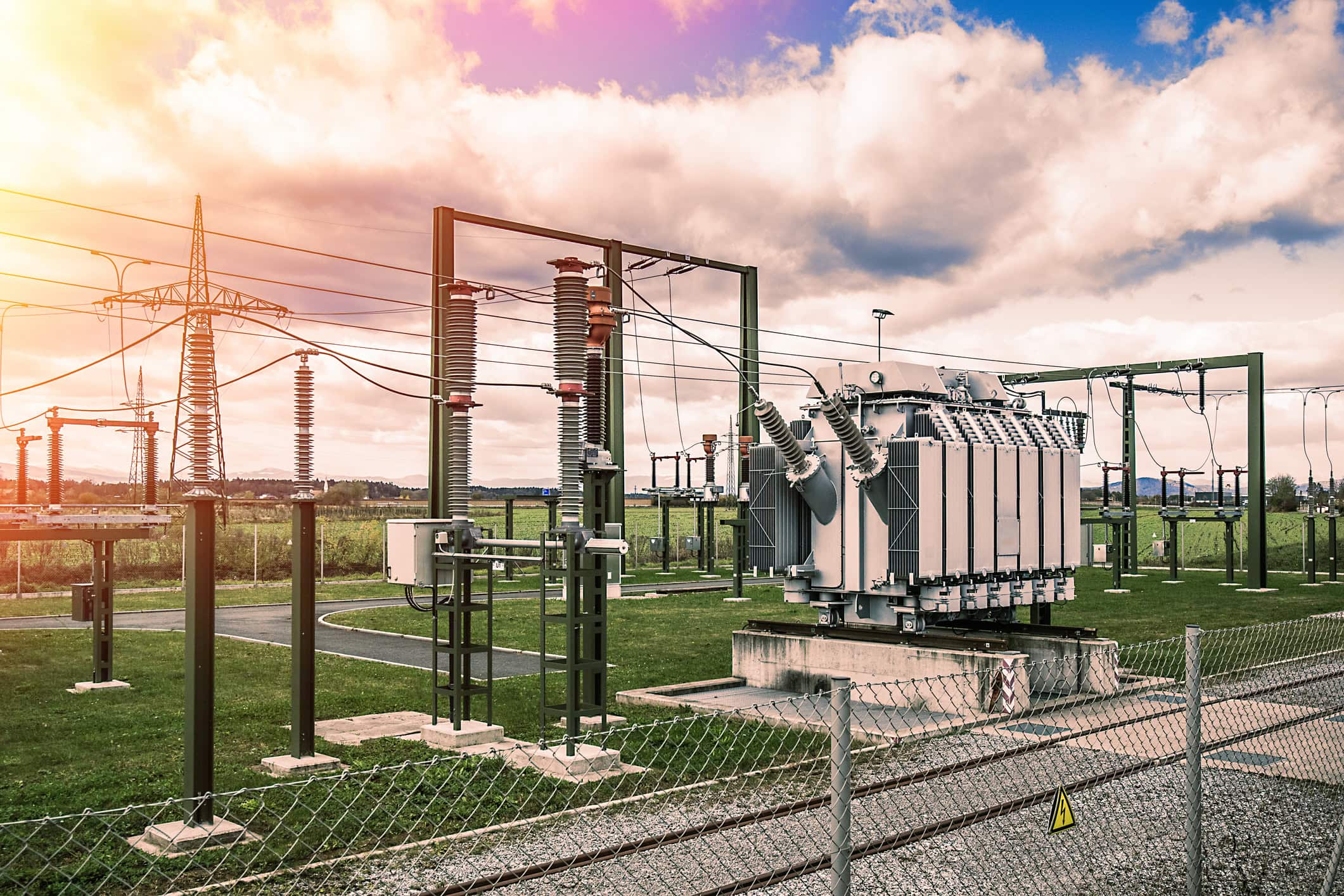
The key reason for voltage transfer is to minimize transmission losses. The higher the voltage, the lower the current, and the lower the heat losses on the lines. Boosting transformers operate in the vicinity of power plants . Electricity is generated at lower voltages (e.g. 10-25 kV). Step-up transformers immediately convert it to very high transmission voltages (e.g. 110 kV, 220 kV, 400 kV) for efficient long-distance transmission. As the power approaches populated areas, distribution transformers step in . These carry out a gradual step-down.

In the industrial environment, voltage conversion is important for powering specific machines and improving safety. Finally, also in solar parks and wind turbines, transformers raise the generated voltage to grid level so that it can be distributed efficiently.

Transformers are part of your life all the time. For example, you will find a distribution transformer in front of your house that reduces the voltage from 22 kV to the standard 230 V for your home. Most of the home voltage transfer is then provided by small adaptors (which contain miniature transformers or electronic switching power supplies). Almost every device that does not run directly on 230 V (mobile phone chargers, laptop chargers, LED lighting) needs a step-down transformer or electronic substitute to safely reduce the voltage (e.g. from 230 V to 5 V for USB or 12 V for lighting).

Voltage transfer is more than just a technical operation

It is the pillar on which modern electricity infrastructure stands. It allows us to transmit electricity with minimal losses while delivering it safely to every device, from a huge production line to the smallest LED bulb.

voltage transfer by transformer

As the only manufacturer of distribution transformers in Slovakia with more than 120 years of tradition, BEZ TRANSFORMÁTORY ensures that this critical voltage transfer takes place reliably and efficiently throughout the distribution network, making it a key link in the stability of the energy infrastructure.

How to calculate transformer parameters

Do you know how to calculate the transformer needed? Correct calculation is the basis for reliable operation, long life and high efficiency. In order for it to work optimally, you need to know exactly its transformation ratio, power, efficiency and losses. However, it is important to understand the basic relationships behind the calculations themselves, whether it is to determine the number of turns, the winding voltage or the power parameters. We therefore bring you a practical step-by-step guide explaining how to calculate a transformer and how to calculate the basic transformer parameters, from transformation ratio to efficiency and losses.

Basic concepts before transformer calculation

Before getting into the actual calculation of the transformer, it is important to understand a few basic concepts and relationships that determine its behavior.

Primary and secondary winding voltage

The transformer has two main parts. A primary winding, to which the input voltage U1 is connected, and a secondary winding, from which the output voltage U2 is taken. The ratio between these two voltages determines the so-called transformation ratio (conversion), which is a basic parameter of every transformer:

  • If U1>U2, it is a step-down (voltage) transformer.
  • If U1<U2 , we are talking about a step-up transformer.

Transformer current and power

The current in the primary winding is denoted by I1 and in the secondary winding by I2. For an ideal transformer, the power at the input and output is the same. However, in a real transformer, some of the power is lost due to thermal and magnetic losses, so the output power is always slightly less than the input power.

Transformer efficiency

Efficiency (η) expresses how efficiently the transformer converts energy. It is defined as the ratio of output to input power: η =Pout/Pin× 100 %. High quality transformers, such as those manufactured by BEZ TRANSFORMÁTORY, achieve efficiencies of 98-99%, reducing operating costs and thermal loads.

Transformer losses

The losses can be divided into two main groups:

  • Stray losses (in iron) occur in the transformer core due to magnetic phenomena (hysteretic and eddy currents).
  • Short-circuit losses (in the windings) are due to the resistance of the windings, in which some of the energy is converted to heat.

Accurate calculation of transformer losses is important to determine its efficiency, cooling capacity and economic operation.

Types of transformers by application

Before the actual calculation, it is also necessary to know the purpose of the transformer, because the method of calculation depends on it:

  • Single-phase transformers are common in smaller equipment and power supplies.
  • Three-phase transformers are used in power and industrial applications.
  • Measuring transformers are designed for accurate current or voltage measurements.
  • Power transformers transmit high power in electrical networks.

These concepts form the basis without which the transformer calculation would not be accurate or understandable.

transformer calculation

Calculation of the transformation ratio

One of the basic parameters that determine the behavior of the transformer is the transformation ratio. This ratio indicates how many times the voltage between the primary and secondary windings changes.

The transformation ratio (k) is determined by the formula: k = U1/U2 =N1/N2,where:

  • U1= primary winding voltage (V)
  • U2= voltage on the secondary winding (V)
  • N1= number of turns of the primary winding
  • N2= number of turns of the secondary winding

This relationship shows that the ratio of stresses is the same as the ratio of the number of turns. So, for example, if we want to reduce the voltage by a factor of ten, the secondary winding must have ten times fewer turns than the primary.

Application of transformation ratio calculation in practice

Calculating the ratio helps determine the number of turns of the windings and the cross section of the core. By verifying the transformation ratio, it can be determined whether the device is in order or has a damaged winding. Modern software and online calculators make it possible to quickly determine the correct transformation ratio without manual calculations.

Almost all transformers also have a tap changer that allows you to vary the voltage on the primary side, normally between -5% and +5%. By changing the tap, you can keep the secondary voltage constant. Such regulation can be in an off load or on load state. Transformers with an OLTC on-load tap changer are installed at locations with frequent voltage changes on the primary side. The demand for these transformers is increasing due to the renewable resources connected to the distribution grids.

transformer calculation

Recommendation of the experts from BEZ TRANSFORMÁTORY

When designing or checking the transformer, always compare the calculated transformation ratio with the nominal data on the label. Deviations may indicate wear or a fault in the winding.

Calculation of transformer power

The transformer power rating determines how much electricity the device can transfer from the primary circuit to the secondary circuit without excessive heating or losses. This parameter is critical in both the design and selection of a suitable transformer for a particular application.

The basic relationship for the apparent power of a transformer is S = U × I, where:

  • S = apparent power (VA or kVA)
  • U = voltage (V)
  • I = current (A)

This formula expresses the output of one phase. For a three-phase transformer, the power is calculated as follows.

The result is most often given in kilovolt-amperes (kVA), which represents the rated power of the transformer.

How to determine the required transformer power

When designing or selecting a transformer, it is necessary to take into account:

  • the sum of the outputs of all connected devices,
  • power reserve: it is recommended to increase the rated power by 10-20%,
  • nature of the load: continuous, intermittent or impact,
  • power factor and operating conditions ( e.g. ambient temperature, cooling).

When deciding on power, evaluate efficiency, as transformers reach their highest efficiency at loads between 40-60% of rated power.

Properly selected power ensures stable operation and minimizes thermal stress on the windings. Transformer power is a key parameter that affects its size, weight and operating efficiency. Therefore , it is important to perform an accurate calculation of the transformer at the design stage and verify it by practical measurement or software simulation.

Transformer power: what it really means and why it matters

Transformers play a key role in the transmission and distribution of electricity. They allow the voltage to be stepped down and stepped up efficiently. Thus, they can minimise losses in the transmission of electricity over long distances. From the point of view of the stability of the entire power grid, the performance of the transformer is crucial. Improperly sized ones can not only lead to energy losses. What else is at risk can be found in the following lines.

Transformer power in units of kilovolt-ampere (kVA) or megavolt-ampere (MVA)

It expresses the amount of electrical energy that the device is capable of efficiently transferring between the input and output sides. BEZ TRANSFORMÁTORY manufactures oil-immersed equipment from 50 kVA up to a maximum output of 16 MVA and dry cast-insulated variants from 100 kVA up to a maximum of 10 MVA, with maximum equipment voltages up to 38.5 kV.

Factors affecting efficient operation

Too low a transformer output can lead to overloading, while equipment with unnecessarily high output is both inefficient and unnecessarily more costly.

Znížený výkon transformátora môže spôsobiť vyššie teploty, ktoré znižujú schopnosť zariadenia odvádzať teplo. Napríklad olejové modely majú vyššiu schopnosť odvádzať teplo než suché. Výber správneho typu chladenia tak priamo ovplyvňuje aj výkon a životnosť zariadenia.

short circuit in the power grid, transformer power
The quality of the supply voltage is very important for trouble-free operation. Fluctuations can cause higher losses and reduce efficiency.

The transformer achieves best efficiency at loads in the range of 50 to 70% of rated power

At low loads, it is unable to use its full capacity. On the other hand, overloading can cause overheating and an increase in heat loss.

The ratio between active and apparent power is determined by the power factor (cos φ). In optimum operation, it generally reaches the highest values, which means that the equipment is operating efficiently and maximising the delivery of useful energy.

Properly sized transformer power minimizes losses and contributes to even power distribution

When selecting the power, consider first of all the expected load on the network. Consider also that for installations in confined spaces, such as urban substations, higher power also means larger dimensions and more demanding space requirements.

large industrial transformer, transformer power

You need different transformer power for industrial plants and power stations and different power for public buildings, shopping malls and hospitals.

How to find the optimal solution? Recommendation when choosing a transformer

Vypočítajte si koeficient zaťaženia a zvoľte primeraný výkon.  Zohľadnite aj priestorové možnosti, vlhkosť, teplotu a prašnosť prostredia. Zvážte, či ide o vonkajšiu, alebo vnútornú inštaláciu. Vonkajšie priestory umožňujú použitie väčších jednotiek. Olejové modely sú vhodnejšie pre vonkajšie aplikácie napríklad pre umiestnenie v trafostanici, zatiaľ čo suché typy sú prednostne určené do vnútorných prevádzok napríklad v priemysle. 

BEZ TRANSFORMÁTORY is one of the leaders in the manufacturing industry and offers a broad portfolio of products designed for a variety of needs and applications. They provide long-lasting and efficient operation and represent a modern solution with an emphasis on safety and environmental friendliness. The company adapts to market needs, invests in research and development and develops products that meet the most stringent standards. It delivers optimal solutions and meets the needs of a variety of customers from small businesses to large industrial corporations.

Ak hľadáte spoľahlivé a efektívne riešenie, kontaktujte nás. Ponúkame široké portfólio olejových a suchých transformátorov, ktoré vám pomôžeme prispôsobiť presne vašim potrebám.